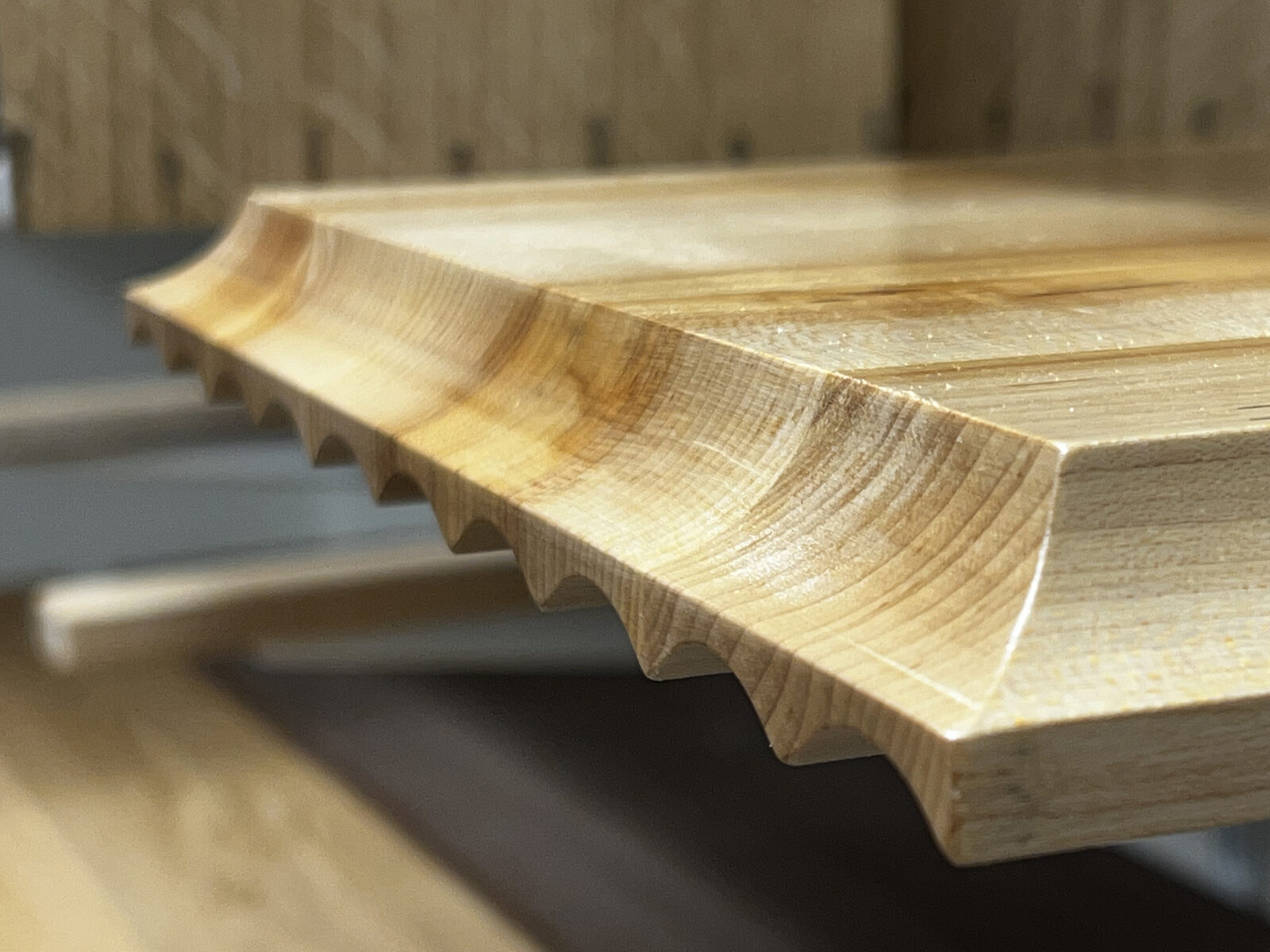
Built in Buckinghamshire, fitted in Oxfordshire.
The workshop is a unit at The Hollows in Little Horwood, MK17 0PD, and that is where nearly all of the work happens. Timber is chosen there, joints are cut there, carcases are assembled and dry fitted there, and finishes are applied there. Your house sees the last stage of the job, not the messy middle of it.
From there I work across Oxford and Oxfordshire, with seven settlements coming up often enough to have earned pages of their own: Oxford itself, Summertown, Jericho and Headington within the city, then Woodstock, Witney and Abingdon beyond it. I also cover surrounding parts of Buckinghamshire and Berkshire.
Keeping the range deliberately tight is not a marketing decision. One person cannot design, build and fit properly while driving all day, and fitting is the stage where somebody needs to still be paying attention at six in the evening.
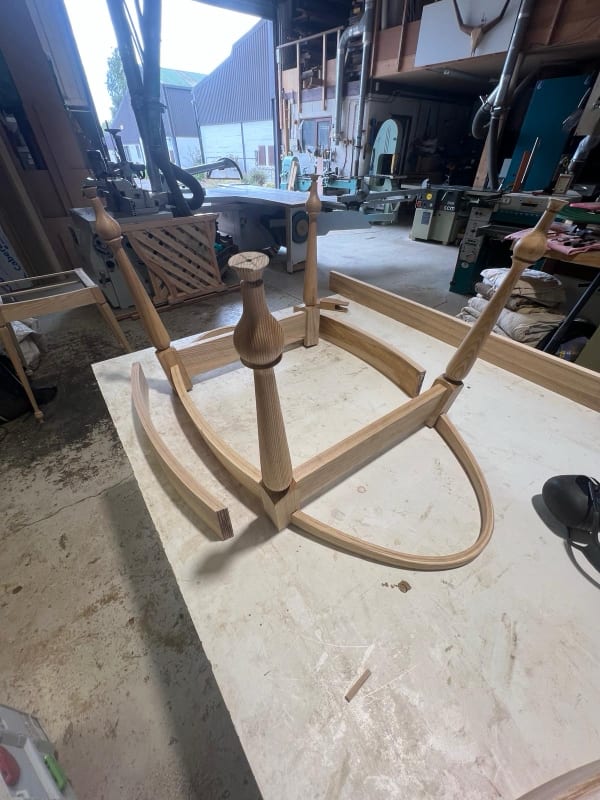
Little Horwood, where most of the job actually happens.
Which authority you deal with changes with the town.
This is the part people are most often caught out by, because advice travels between neighbours faster than it travels between planning departments. Oxford, Summertown, Jericho and Headington all sit with Oxford City Council, which administers eighteen conservation areas across the city. Woodstock and Witney fall to West Oxfordshire District Council, which has fifty one, with permitted development rights restricted inside them. Abingdon is Vale of White Horse District Council, with fifty two across a district that also takes in Wantage and Faringdon.
The law behind it does not change from town to town. Conservation area status principally governs external work and permitted development, and does not usually control fitted joinery indoors. Listing is the status that governs interiors, and that is where a project can genuinely change shape.
What does change is who you ring, which map applies, and which officer's view you need. That is worth knowing before a design is signed off rather than after, which is why every town page here names the authority that covers it.
- Oxford City Council: Oxford, Summertown, Jericho, Headington
- West Oxfordshire District Council: Woodstock, Witney
- Vale of White Horse District Council: Abingdon
The house decides the job.
Across these seven places the building stock runs from medieval and timber framed, through Georgian stone and Victorian villas and artisan terraces, to interwar semis and modern estates. Two of the towns hold two eras at once inside their own boundaries. So the town tells me which council and roughly what to expect, and then the survey tells me the truth.
That is why the first visit is free, usually at your home, and happens before anything is drawn. Wall construction, how far things run out of true, ceiling height, alcove depth and the route in are the five numbers that shape a design, and none of them can be taken from a postcode.
Pick your town, or pick the room.
Each town page covers all the work I do there and the physical characteristics of the houses in it. Each service page covers one kind of commission in depth, and there is a page for each service in each town for the detail where the two meet.
If your town is not listed, it is still worth asking. The seven below are the places that come up most, not a boundary drawn on a map.
Two different things get confused constantly, and the distinction is the same in all three districts. A conservation area is about the character of a place, so it restricts permitted development and external alteration, and it does not usually reach a fitted wardrobe or a kitchen inside the house.
A listed building is protected inside and out. Replacing existing modern fittings, redecoration and minor internal alterations generally do not need listed building consent. Forming a new kitchen, changing the plan form to accommodate one, or work affecting original plaster, joinery, cornicing, floorboards or fireplaces generally does. If your house is listed, a conversation with the conservation officer at the right one of these three councils, before work starts, is the single most useful half hour in the project.
Every room.
Frequently asked questions
Where is the workshop?
Unit 1b, The Hollows, Little Horwood, Buckinghamshire, MK17 0PD. Design, machining, assembly and finishing all happen there, and only the fitting happens at your house.
Which areas do you cover?
Oxford and Oxfordshire, with Oxford, Summertown, Jericho, Headington, Woodstock, Witney and Abingdon coming up most often, plus surrounding parts of Buckinghamshire and Berkshire. Each of those seven towns has its own page here.
Why do the towns fall under different councils?
Because the city and the surrounding districts are separate authorities. Oxford, Summertown, Jericho and Headington are Oxford City Council. Woodstock and Witney are West Oxfordshire District Council. Abingdon is Vale of White Horse District Council.
Does the authority change what I am allowed to do?
The underlying rules are national, so the principles hold everywhere. What changes is the designation map, the local guidance and the officer you speak to, which is why it is worth knowing which council covers your address.
How many conservation areas are there across the towns you cover?
Oxford has eighteen. West Oxfordshire, covering Woodstock and Witney, has fifty one, with permitted development rights restricted inside them. Vale of White Horse, covering Abingdon, has fifty two across the district.
Is my town too far away?
Ask rather than assume. The list here reflects where the work usually is, not a hard boundary, and the deciding factor is normally the scale of the commission rather than the distance.
Do you charge for the first visit?
No. The first consultation is free and carries no obligation, and it is usually at your home so I can see the room, the light and the access rather than working from photographs.
Do you take on more than one job at a time?
No. One maker, one project, which is the reason a kitchen runs 10 to 16 weeks rather than being squeezed into a shorter slot. It also means there is sometimes a wait before a start date.
Can you work with an interior designer or architect on a local project?
Yes. I build from architects' and interior designers' drawings regularly, and I am equally happy developing a design from nothing with the homeowner.
What if my house is in a conservation area and also listed?
Then both apply, and the listing is the one that affects the inside. It is a straightforward thing to check with the relevant council, and the answer shapes the design rather than ruling the project out.
Let's make something
Tell me where the house is and what the room is doing wrong, and I will come and look at it. Free, no obligation, and usually the fastest way to find out whether the idea in your head is achievable.