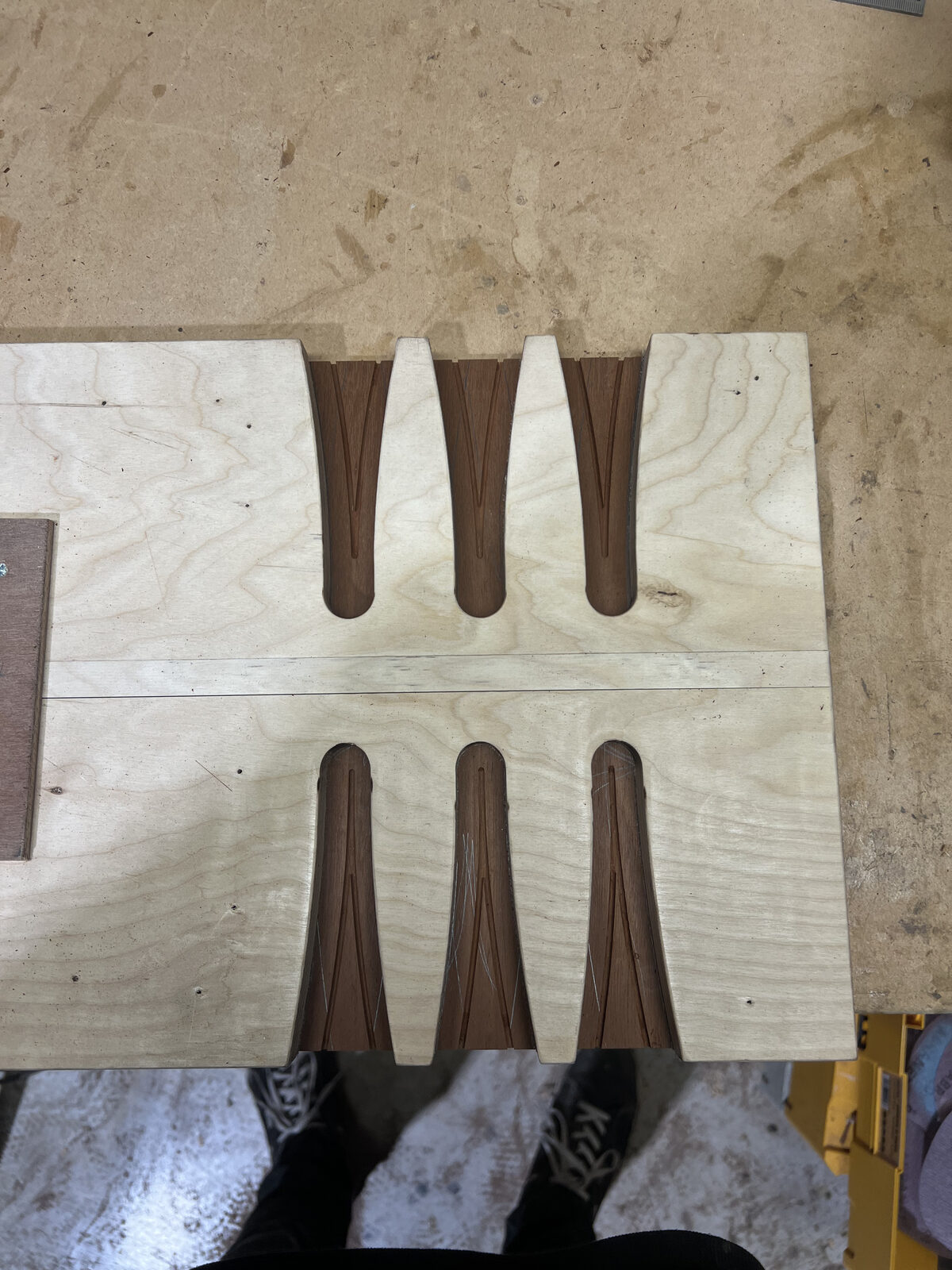
The era of the room sets the scale of the piece.
Abingdon is not one kind of housing. There is a medieval core, there are Victorian villas around Albert Park, and there is twentieth century housing at Northcourt, and for freestanding work those are three separate design problems that happen to share a town.
In the oldest part of town the room is usually low and the walls are thick, so the piece has to be broad rather than tall and it has to keep its weight low. Around Albert Park the villas give tall ceilings and full height windows, and there the danger runs the other way: an ordinary sized dresser or bookcase looks marooned on a big wall, and height is what makes it belong. At Northcourt the ceilings are moderate and the windows are wide, which suits a horizontal piece with a long clean top and very little visual bulk underneath it.
So when someone tells me they want a dining table or a desk, the useful next question is which part of Abingdon it is for. Not because the postcode changes the craftsmanship, but because it changes the dimensions, and the dimensions are what make a piece look as though it was always meant to be there.
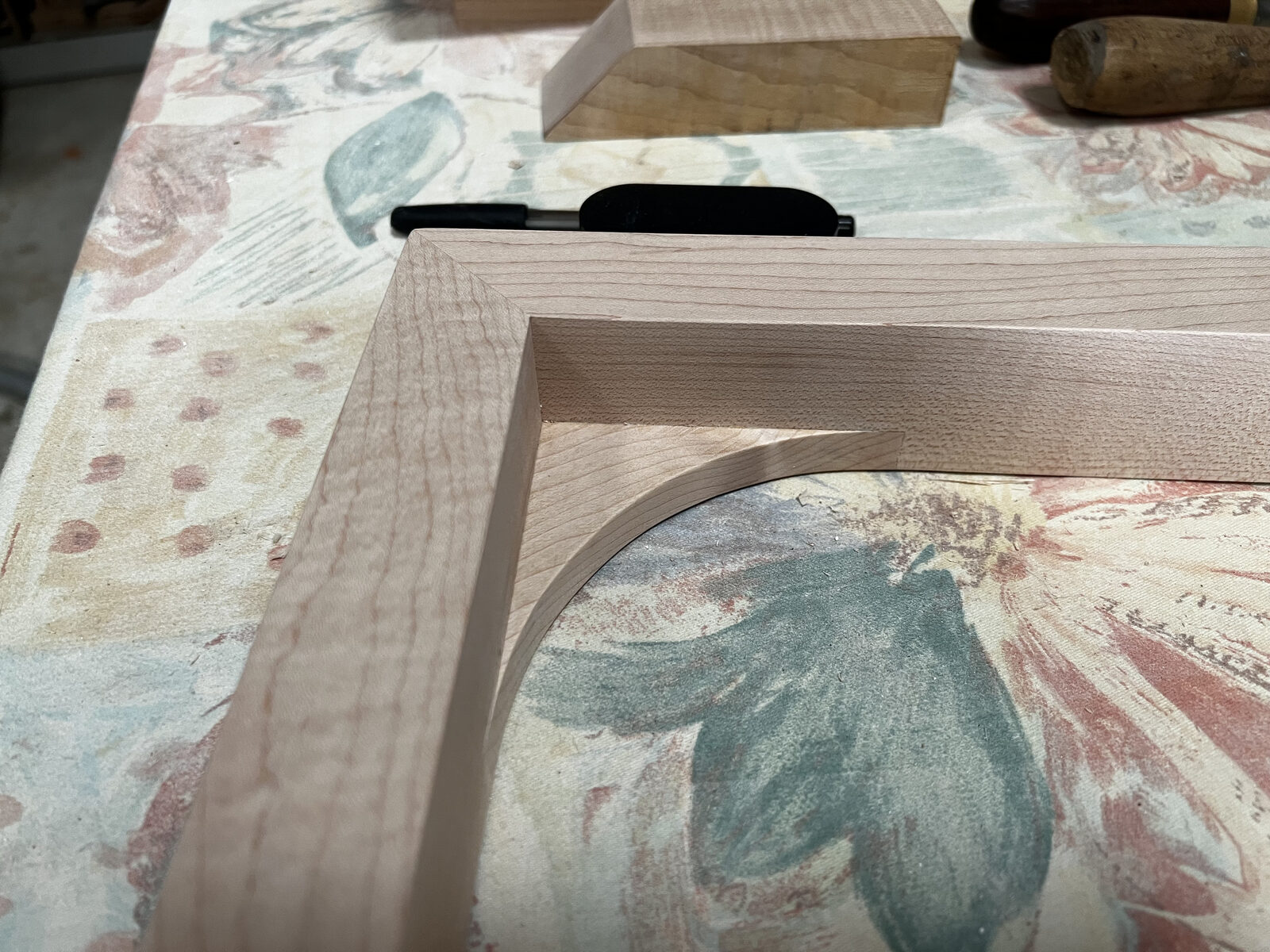
Same maker, same timbers, three different sets of numbers.
Deep reveals, tall sashes and wide mid century glazing.
Timber choice follows the window, and the three parts of town have three different windows. In the medieval core the openings are small and the reveals are deep enough to take light out of the room before it reaches anything, which puts ash, sycamore and a quieter oak at the top of the list because they keep a low room open.
The Victorian villas have height and glass to spare, so walnut, elm, burr oak and cherry can all be used properly there, with light running across the figure instead of dying in it. Wide twentieth century glazing at Northcourt gives even, flat light across a long surface, which is generous to a clean board and unforgiving to a busy one, so I would tend towards a straight grained oak or cherry and let the plane of the top do the talking. It is the same list of native English hardwoods from the same sustainable British suppliers in every case. What changes is which board belongs in your room.
A new piece next to old joinery, and neither pretending.
Where a room has kept original features, a stone or timber fireplace surround in an older house, moulded skirtings and a chimney piece in a villa, a commissioned piece has to sit next to them without imitating them. Copying the detail of an older period puts the new work into a comparison it cannot win, because the eye reads the difference between a genuine old surface and a new one immediately.
So the piece is made honestly of its own time: plain proportion, one timber, joints cut so they can be seen, and nothing applied that is not doing a job. That sits comfortably beside original work, in a way that a reproduction never quite manages.
There is a practical advantage to this that people appreciate later. Because the piece belongs to you rather than to the building, it can move rooms when the family changes shape, and it can move house without being wrecked in the process. In a town where people tend to move within the town rather than out of it, that is worth more than it sounds.
Older streets, tighter routes.
A freestanding piece has to arrive as a finished object, so the route in is measured at the same visit as the room. At Northcourt and in the later housing that is usually straightforward. In the oldest part of the town it needs proper attention: a low door head, a thick wall making the opening a short tunnel, and a stair that turns tightly can all reduce the largest thing that will ever get into an upstairs room.
Where the route is the binding constraint, the design answers it rather than ignoring it. A frame built to bolt together and come apart again, a top that travels separately, or a round top where a rectangle would not turn the corner. I would rather resolve that at the drawing stage than discover it on delivery day.
The planning authority here is the Vale of White Horse District Council, a different one again from Oxford and from West Oxfordshire, covering Abingdon, Wantage and Faringdon with 52 conservation areas across the district. Abingdon itself has several, including Abingdon Town Centre, Albert Park and Northcourt, so it is worth knowing which one a house falls in rather than assuming the rules, because they are separate designations with different characters.
For a freestanding commission none of that creates a consent question. The piece is not fixed to the building, so it alters nothing, so no planning permission and no listed building consent arises, and that holds even where the property is listed. It is a good reason to consider a commission for an older Abingdon house: fitted joinery that disturbs original plaster, boards, panelling or a fireplace would generally need listed building consent, and the council's conservation officer would be the first call. A dresser or a table standing on the floor of the same room needs nothing from anyone.
Other rooms in Abingdon.
Frequently asked questions
Why does it matter which part of Abingdon I live in?
Because the era of the room sets the scale of the piece. A low, thick walled room in the old core wants a broad piece that keeps its weight low, a tall villa near Albert Park wants height or the piece looks marooned, and the wide glazing at Northcourt suits a long horizontal top with little bulk beneath it.
Which council covers Abingdon?
The Vale of White Horse District Council, which is a different authority from Oxford City Council and from West Oxfordshire. It has 52 conservation areas across the district, and Abingdon itself contains several, including Abingdon Town Centre, Albert Park and Northcourt.
Does a commission need any consent here?
No. Consent regimes cover work that alters a building, and a freestanding piece is fixed to nothing and alters nothing, so no planning permission or listed building consent applies. That stays true in a listed house, which is one reason a commission suits an older property well.
How do I find out which conservation area my house is in?
Ask the Vale of White Horse District Council, because Abingdon is several designations rather than one and they do not all read the same way. It makes no difference to a piece of furniture, but it matters a great deal if you are also thinking about fitted work or anything external.
Which timber suits a room in the old part of town?
Ash, sycamore or a quieter oak. Small openings and deep reveals take a surprising amount of light out of a room, and the more heavily figured boards need light across them to be worth having. In a dim low room they read as a dark mass instead.
What suits a room with wide mid century windows?
Even, flat light is generous to a clean board and unkind to a busy one, so a straight grained oak or a cherry usually looks best at Northcourt and in similar housing. The plane of the top becomes the feature rather than the figure in the grain.
Should the piece match an original fireplace or old joinery?
It should sit alongside it, not copy it. New work detailed in an older idiom invites a direct comparison with the genuine surface next to it and loses. Plain proportion, a single timber and visible joinery hold their own beside original features far more convincingly.
If I move house within Abingdon, does the piece come with me?
Yes. It belongs to you rather than to the building, so it goes in the van, and because nothing was scribed or screwed to a wall there is nothing to repair afterwards. It gets levelled again in its new room and carries on.
Will it get through the door of an older house?
That gets measured on the first visit. A low door head, a thick wall and a tight stair can all set the limit, and where they do, the frame can be built to bolt together, the top can travel separately, or a round top can be used where a rectangle will not turn.
What will it cost, and how long will it take?
Every commission is quoted individually after the first conversation, because size, timber and the complexity of the joinery move both the price and the timescale too much for a published figure to mean anything. You get both in writing before any board is cut.
Let's make something
Tell me which part of Abingdon the piece is for and what it has to do, and the proportions can start being worked out properly. The first visit is free, at your home, and commits you to nothing.