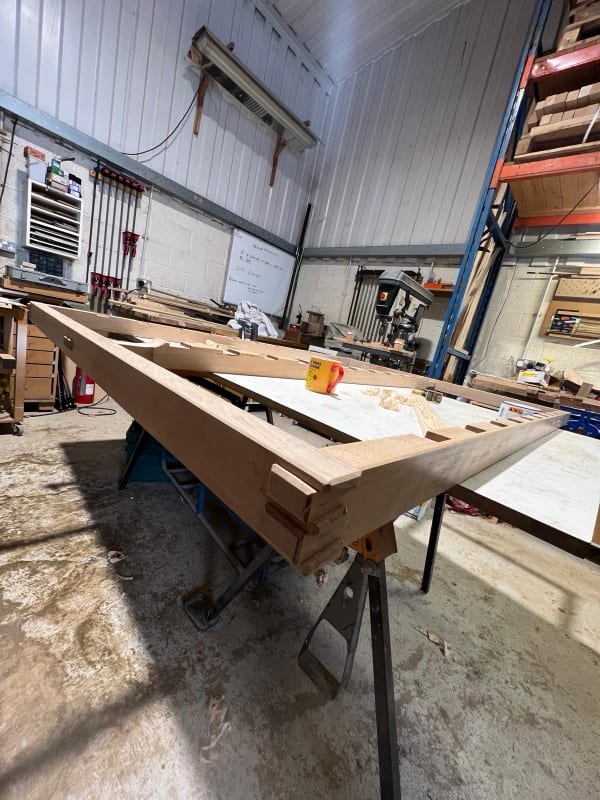
Stone cottage, or 1930s semi.
Headington holds Old Headington's stone cottages alongside a large stock of interwar semi-detached housing, and for freestanding work those are two separate problems wearing the same postcode. The stone cottages bring lower ceilings, thick walls, small openings and floors that have settled. The interwar semis bring squarer rooms, standard ceiling heights, a bay in the front room and a good deal more predictability.
In a cottage the constraint is headroom and it is absolute. A dresser or a tall bookcase has to lose height rather than gain it, and once you take height away the storage has to reappear as width or depth, which changes the whole composition. A low, long piece reads correctly in a room with a low ceiling. The same piece in a semi will look like it is hiding.
In an interwar semi the room is usually agreeable and the constraints are the fittings: a radiator under the window, a door that swings into the corner where the piece wants to stand, and a chimney breast with recesses that are shallower than they look. Freestanding work has an advantage here, because a piece that is not fixed can be positioned to clear a door swing and moved again when the room changes.
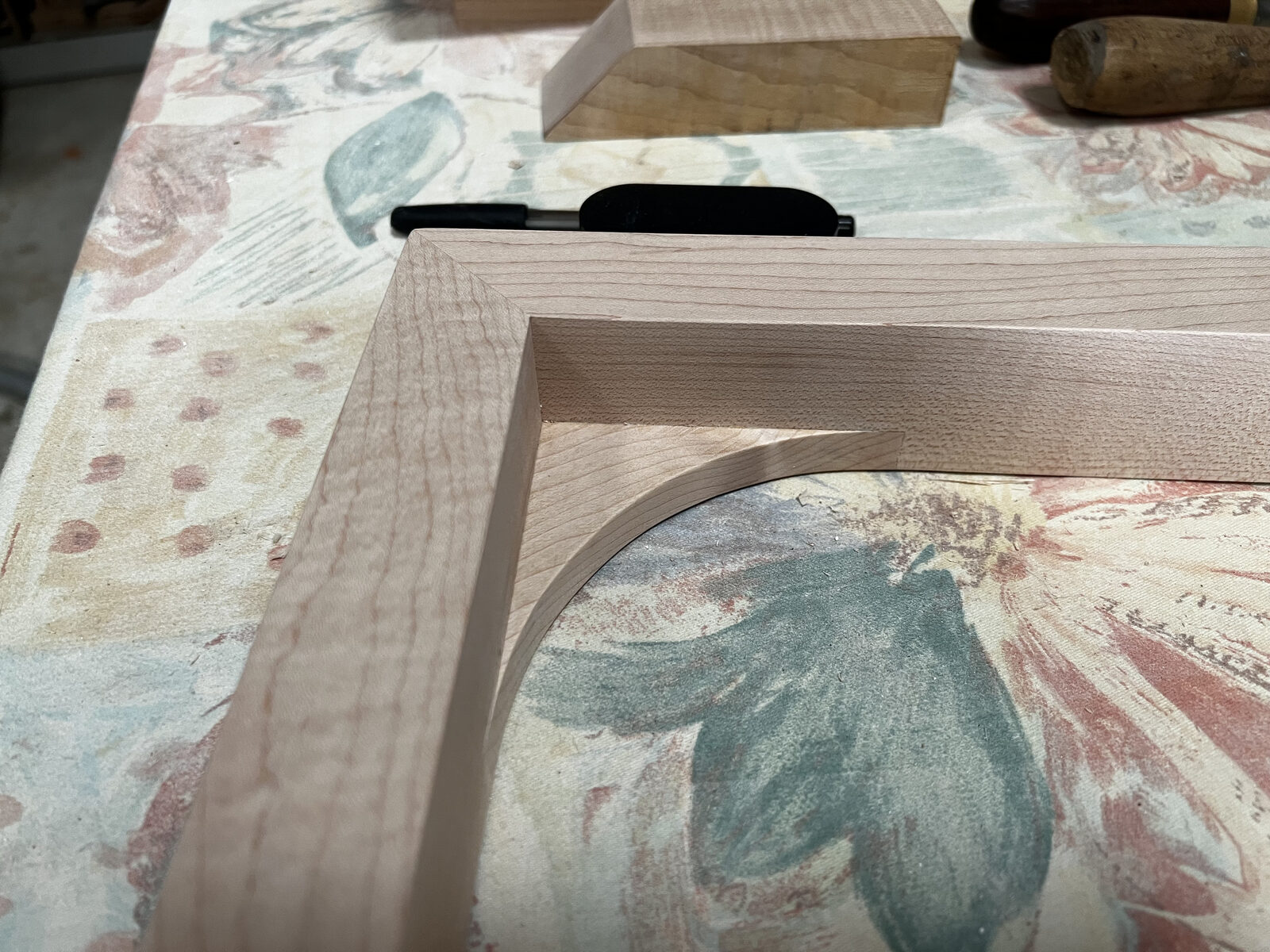
The same brief, drawn twice, for two different ceilings.
A four legged table on an old stone floor.
Floors in the older cottages have had a long time to move, and a rigid four legged table set on an uneven floor will rock, because three points define a plane and the fourth has to be argued with. That is a construction question rather than a fitting one, and it gets solved in the workshop rather than with a folded piece of card under a leg.
There are proper answers. A frame stiff enough that the top does not twist when one foot is high. A pair of trestles, which behave far better on an uneven floor than four independent legs. Or a pedestal, which stands on a single foot and can be levelled once and forgotten. Which of those is right depends on how bad the floor actually is, which is something I want to see rather than be told.
Because none of it is fixed to the building, the piece stays adjustable. If it moves to another room with a different floor, it gets levelled again in five minutes. Fitted joinery scribed to a settled cottage wall does not have that option.
Small openings at one end of the suburb, big windows at the other.
The window is the real difference between these two housing types, and it decides the timber. A stone cottage with small openings and deep reveals holds much less light than the metal or timber framed windows of an interwar house, and a bay fronted semi's front room is brighter again.
So for the cottages I lean towards ash, sycamore or a quieter oak, which keep a low ceilinged room feeling open rather than pressing down on it. In the lighter interwar rooms there is room for cherry, elm or walnut, and a figured board has enough light across it to be worth the money. It is the same list of native English hardwoods either way, from the same sustainable British suppliers. What changes is which board belongs in your room.
Two different doorways, two different limits.
A freestanding piece has to arrive whole, or at least in parts that go back together properly, so the route in gets measured on the first visit either way. In an interwar semi that is usually a formality: the halls are reasonable, the doors are reasonable, and most things go in without argument.
The older cottages are the ones to check carefully. A low door head, a thick wall making the opening effectively a short tunnel, and a stair built as an afterthought can all reduce the largest piece that will ever get upstairs. Better to know that before the drawing than on the day, so I take the figures and design inside them.
Oxford City Council is the planning authority for the whole of Headington, and Headington Hill is a conservation area, characterised by its open green space. Designation of that kind bears on external alterations and on permitted development rights, not on the furniture inside a room.
For a freestanding commission there is no consent question at all, because the piece is not fixed to the building and therefore alters nothing about it. No planning permission, no listed building consent, and that stays true if your cottage in the older part of the suburb happens to be listed. It is a reason a commission can suit a listed house particularly well: fitted joinery cut into original stonework, plaster or floorboards would generally need listed building consent from the city council, while a dresser or a table standing on those same boards needs none.
Other rooms in Headington.
Frequently asked questions
Why would the same piece not suit both halves of Headington?
Because ceiling height changes proportion completely. A tall dresser that reads well in an interwar semi has to lose height in a stone cottage, and the storage then has to come back as width or depth. A low, long piece looks right under a low ceiling and looks like it is hiding in a taller room.
My cottage floor is uneven. Will a table rock?
Not if it is built for the floor. Three points define a plane, so a rigid four legged frame on a settled floor is the problem. A stiff frame, a pair of trestles or a single pedestal all handle it properly, and the choice depends on how much movement the floor actually has.
Can furniture be moved between rooms later?
That is one of the real advantages of freestanding work. Nothing is scribed or screwed to the building, so a piece can be re-levelled in a new room in a few minutes, or go with you to the next house entirely.
Does a commission need consent in Headington?
No. Headington Hill is a conservation area under Oxford City Council, and that designation concerns external work and permitted development rights. A piece of furniture standing on the floor is not development and needs no permission.
What if my Old Headington cottage is listed?
Freestanding furniture is still unaffected, because nothing is fixed to the fabric of the building. That is exactly why a commission is sometimes the sensible route: fitted joinery cut into original stone, plaster or boards would generally need listed building consent from the city council, and a table would not.
How do you work around a radiator under the window?
By positioning rather than by cutting. A freestanding piece is placed to clear the heat and the door swing, and if the arrangement of the room changes it moves again. That is a different conversation from fitted work, where the radiator often has to be relocated.
Which timbers suit a low ceilinged room?
Ash, sycamore and a quieter oak, generally, because a small window and deep reveals leave less light to work with and those timbers keep the room open. Cherry, elm and walnut suit the brighter interwar rooms, where a figured board actually gets seen.
Will a large piece get up a cottage staircase?
That is worth establishing before anything is drawn. A low door head, a thick wall and a tight stair set a hard limit on the biggest object that can go upstairs, so I take those measurements at the survey and design within them rather than hoping on the day.
What is the price and the lead time?
Both come to you individually in writing after the first conversation. There is no headline figure for a commission because size, timber and joinery complexity move it too much, and the first visit costs you nothing and commits you to nothing.
Do you make sofas or dining chairs?
No. Upholstery and chairmaking are other people's trades and doing them badly would not serve you. I make tables, desks, side tables, dressers, freestanding shelving and boxes, all in solid native English hardwood.
Let's make something
Whether it is a low ceilinged cottage room or a bay fronted semi, the piece has to be drawn for the room you actually have. Show me the room and I will tell you what scale it wants, free and with nothing to sign.