The room already has an opinion.
Woodstock is Georgian stone townhouses, a good number of them listed, and a Georgian room is not a blank container. Panelled doors, window shutters, a moulded cornice and a chimney piece placed centrally on its wall all pull the room towards symmetry, and anything freestanding you put in it either respects that geometry or fights it.
In practice that governs placement as much as design. A dresser set slightly off centre on a Georgian wall looks like a mistake in a way it never would in a Victorian terrace, because the room announces its own centre line. So the drawing starts with where the piece stands, and the dimensions follow from the wall it has to balance against rather than from a standard size.
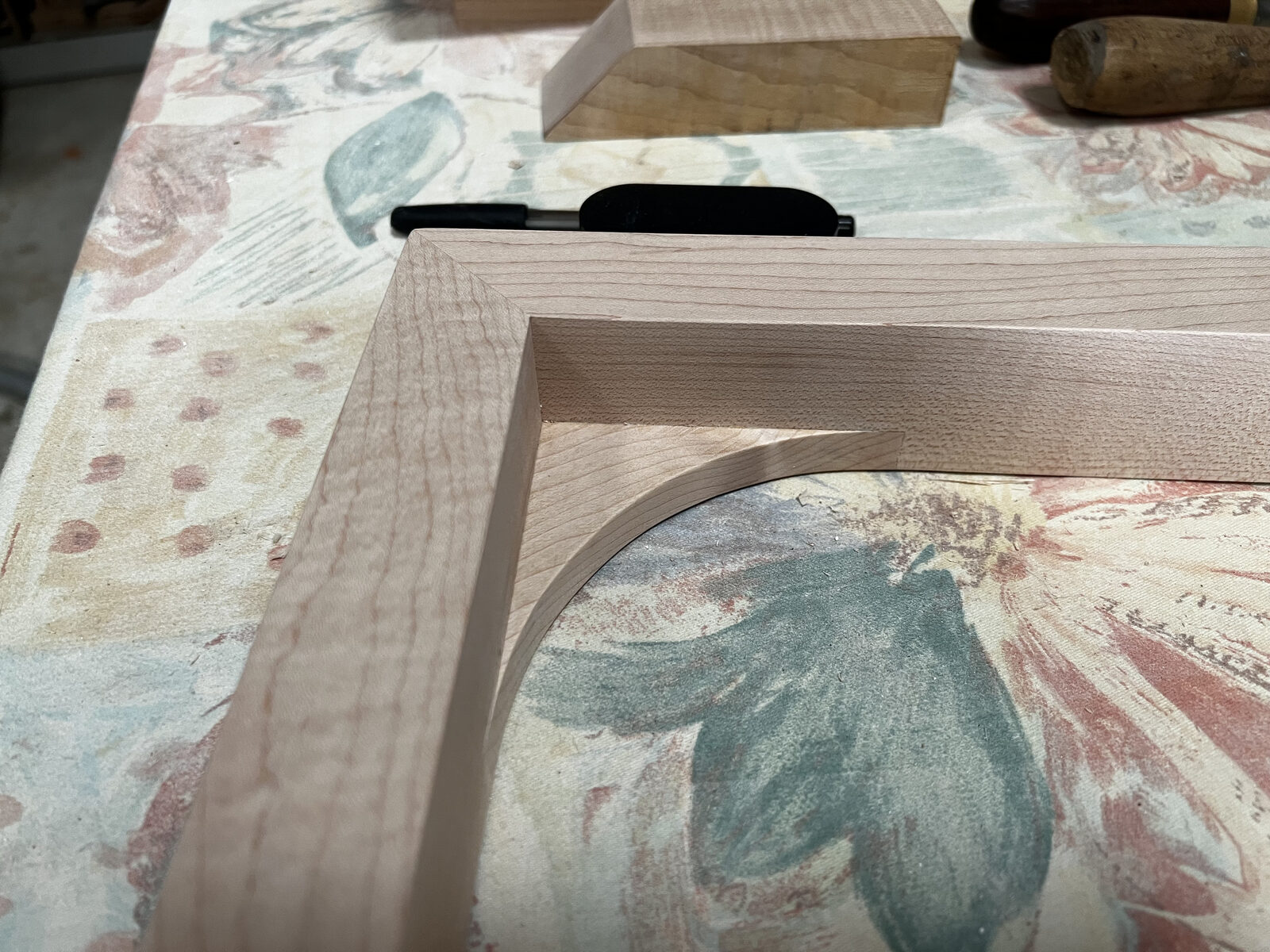
The other half of the problem is detailing, and the failure mode is pastiche. Newly cut mouldings in an eighteenth century idiom placed next to genuine eighteenth century joinery invite a comparison they cannot win. A plainly proportioned piece in a good solid board, with the joints cut to be looked at and no applied decoration doing nothing, sits beside that joinery as a piece of its own time and holds its own. That is a harder thing to make than a reproduction, and a better thing to live with.
Plain proportion, visible joinery, nothing pretending to be older than it is.
The one commission a listed townhouse never has to apply for.
This is the town where consent is a live question rather than a footnote. West Oxfordshire District Council is the planning authority, the Woodstock conservation area was designated on 28 May 1975, and permitted development rights are restricted inside the district's conservation areas. If the house is also listed, fitted joinery becomes a project with an application attached to it.
A freestanding commission does not, and the reason is worth understanding rather than taking on trust. Consent regimes govern work that alters a building. A piece of furniture standing on the floor alters nothing, is fixed to nothing, and can be carried out again, so no planning permission and no listed building consent arises even in a listed house.
That has a practical consequence people do not always spot. If what you actually want is a run of storage in a listed room, a dresser or a tall freestanding bookcase built to the dimensions of that specific wall can deliver most of what fitted joinery would have done, without touching original plaster, original boards or an original chimney piece, and without a consent process. It is not a workaround. It is the older and in some ways more appropriate answer.
Tall sashes, deep reveals, and shutters that still work.
Georgian glazing gives a room good light from high up, but the reveals are deep and the shutters fold back into them, so the effective opening is narrower than the window looks. Any piece placed near a window has to leave the shutters free to work, since a house that has kept its working shutters has kept something worth having.
The light itself is generous enough to carry the darker boards. Walnut, elm and burr oak all hold their depth in a tall room with a good sash window, and cherry will darken over the years in a way that suits this kind of interior particularly well. Everything comes from sustainable British suppliers and everything is solid, so the surface can be refreshed in place decades from now rather than replaced.
Front steps, a formal hall, and a narrower stair above.
Townhouses of this era are usually generous on the ground floor and considerably less so above it. The front door and hall will normally take a substantial piece, while the stair to the upper floors was built narrower and turns more tightly, so a desk destined for a first floor room is a different measuring job from a table destined for the dining room.
So the route gets recorded at the survey, floor by floor, along with the step up at the front door. Where a piece is going upstairs I would rather build a frame that comes apart properly than deliver something that will not turn the corner.
West Oxfordshire District Council is the planning authority. The Woodstock conservation area was designated on 28 May 1975, the district has 51 conservation areas in total, and permitted development rights are restricted within them. Designation of that kind is concerned with external change and with the character of the area.
A commissioned freestanding piece needs no planning permission and no listed building consent, because it is not fixed to the building and therefore alters nothing that consent exists to protect. That remains true where the townhouse is listed. It is the reason a commission suits a listed house so well: forming fitted joinery, changing a plan form, or work disturbing original plaster, boards, panelling or a fireplace generally does need listed building consent, and the district council's conservation officer is the right first call in those cases. A dresser standing on the floor of the same room requires no application at all.
Other rooms in Woodstock.
Frequently asked questions
Does a commissioned piece need listed building consent in Woodstock?
No. Consent applies to work that alters a building, and a freestanding piece is fixed to nothing and alters nothing, so none is required even in a listed townhouse. That is a genuine difference from fitted joinery, which in a listed house frequently does need consent.
Which council would I be dealing with?
West Oxfordshire District Council. The Woodstock conservation area was designated on 28 May 1975, the district has 51 conservation areas, and permitted development rights are restricted inside them. None of that touches freestanding furniture, but it is worth knowing which authority is yours.
Can freestanding furniture replace fitted storage in a listed room?
Often, and in a listed house it is worth considering seriously. A dresser or a tall bookcase built to the dimensions of one specific wall gives you most of what fitted joinery would, without touching original plaster or boards and without a consent process attached to it.
Should a new piece be made in a Georgian style?
I would advise against a reproduction. New mouldings cut in an eighteenth century idiom sit next to the real thing and invite a comparison they lose. Plain proportion, a well chosen solid board and visible, neatly cut joinery hold their own beside original detail far better.
Does the symmetry of the room matter?
More than in most housing. A Georgian room states its own centre line through the chimney piece, the door and the window spacing, so a piece set slightly off that line reads as an error. I work out where the piece stands before working out how big it is.
Will a piece block my window shutters?
Not if the shutters are measured open and closed at the survey. Deep reveals mean the effective opening is narrower than the window appears, and a house that still has working shutters should keep them working, so anything near the window is sized to leave them free.
Which timbers suit these rooms?
The light from a tall sash carries the darker end of the list, so walnut, elm and burr oak all work here. Cherry is worth considering because it deepens in colour over the years and suits this kind of interior as it ages. Oak, ash, sycamore and sweet chestnut are all available too.
Can you get a piece up to a first floor room?
Usually, but the upper stair is the limit rather than the front door. Ground floors in these houses are generous and the stair above is narrower and turns more tightly, so for anything going upstairs I measure that route and can build a frame that comes apart and reassembles properly.
What will a commission cost, and how long will it take?
Both are quoted individually once the piece is settled, because timber, size and joinery complexity vary too much for a published figure to be honest. The first conversation is free, and the price and the timescale reach you in writing before anything is cut.
Do you make chairs for a dining table?
No, chairmaking and upholstery are separate trades. I make the tables, desks, side tables, dressers, freestanding shelving and boxes, and I am happy to size a table around chairs you already own or intend to buy.
Let's make something
If you have a room in a Woodstock townhouse that wants a piece of furniture rather than a building project, that is a conversation worth having. The first visit is free, and I will tell you honestly what will sit well in the room.